
Karimen Practice Test Set 2 — 50 Learner Permit Questions
This free practice set contains 50 Karimen questions in the same true/false format as the real knowledge test. The heaviest categories here are road signs (11), intersections (7), safe driving (7).
16 of the questions include road figures — signs, junction layouts and signal scenes — exactly the kind of visual items that cost marks when you meet them for the first time.
Read each explanation before moving on: every answer links back to the rule being tested. When you can score above 90% here, run the same set against the clock inside the free practice app.
Questions 1-30
Question 1
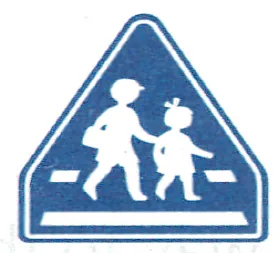
This sign indicates that there are schools, kindergartens or nursery schools close by.
Answer: False
Question 2
A driver must not attempt to overtake when the vehicle ahead is about to change lanes. For example, to make a right turn.
Answer: True
Question 3
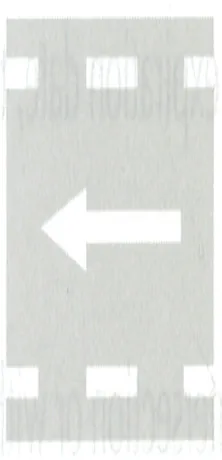
An automobile executing a left or right turn must not proceed in a vehicular lane where there is a pavement marking as shown in the figure.
Answer: True
Question 4
A vehicle may cross to the right to a minimum extent when it cannot proceed on the left side of the road due to road constructions, road damage or other similar situations.
Answer: True
Question 5
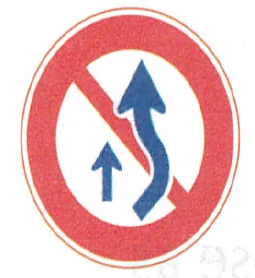
This traffic sign designates "no overtaking."
Answer: False
Question 6
A vehicle, in principle, must not proceed on streetcar tracks. It is allowed to, however, when crossing streetcar tracks in order to make a left or right turn, or to make a U-turn.
Answer: True
Question 7
When there is a school or kindergarten bus and children are getting on and off, a vehicle must slow down to pass the bus while paying attention to children who might suddenly run onto the road.
Answer: True
Question 8
When proceeding behind a vehicle, a driver must maintain enough distance between vehicles so as to avoid colliding with the vehicle ahead if it stops suddenly. In that case, when the vehicles are proceeding faster, the distance must be larger.
Answer: True
Question 9
A vehicle must not cross the road or make a U-turn even where there are no "no U-turn" or "no vehicle crossing" signs, when it might hinder the normal progress of pedestrians or other vehicles.
Answer: True
Question 10
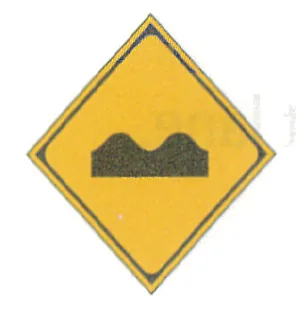
This traffic sign warns that the road is bumpy.
Answer: True
Question 11
When making a left turn at an intersection, a driver must be careful because the rear wheels might hit pedestrians, specified small mopeds or cyclists due to a wheelbase differential.
Answer: True
Question 12
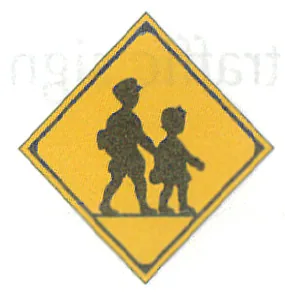
A driver must be careful when proceeding on a road where there is a traffic sign as shown in the figure, because children might suddenly run onto the road.
Answer: True
Question 13
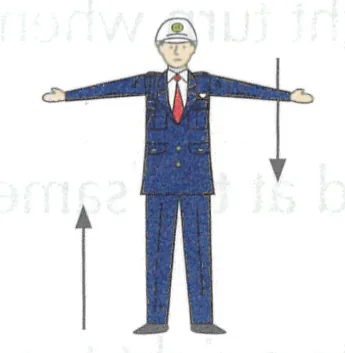
A police officer's hand signal as shown in the figure has the same meaning as the yellow traffic light of a traffic signal for traffic proceeding in the direction of the arrows.
Answer: False
Question 14
When starting the vehicle, it is advisable for a driver to check the vehicle's surroundings, give a signal that you are about to move, and check the safety around the vehicle again after the signal.
Answer: True
Question 15
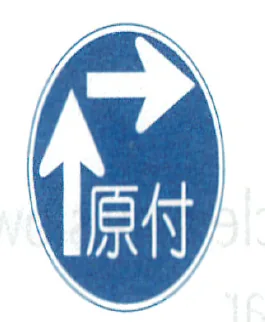
A general moped must make a two-step right turn at a controlled intersection where there is a traffic sign as shown in the figure.
Answer: True
Question 16
Drivers are required to obtain not only driving knowledge and skill, but also good morals as a member of society.
Answer: True
Question 17
A vehicle may proceed straddling two vehicular lanes when traffic is congested.
Answer: False
Question 18
When a vehicle is passing specified small mopeds or a cyclist, the same precautions are required as when passing a pedestrian.
Answer: True
Question 19
When braking, a driver must first depress the brake pedal as strongly as possible.
Answer: False
Question 20
It would be advisable for a driver not to check the safety to the rear too often, because by doing so the vehicle speed decreases and it may cause traffic congestion.
Answer: False
Question 21
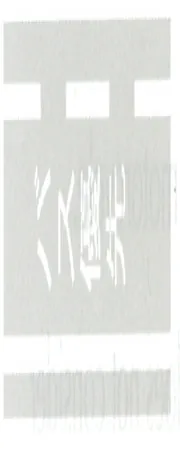
A vehicle must not use a lane where there is a pavement marking as shown in the figure, when traffic congestion might prevent the vehicle from leaving the lane immediately if a local bus approaches.
Answer: True
Question 22
Overtaking is prohibited near the top of an uphill or along a steep downward slope.
Answer: True
Question 23
Yellow pavement markings indicate stronger regulations than those indicated with white pavement markings.
Answer: True
Question 24
A vehicle is not required to stop when proceeding through a railway crossing with an alarm if the alarm is not sounding.
Answer: False
Question 25
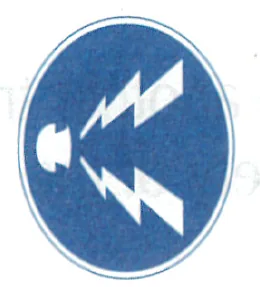
A driver must sound the vehicle's horn where there is a traffic sign as shown in the figure, even if he or she does not observe danger.
Answer: True
Question 26
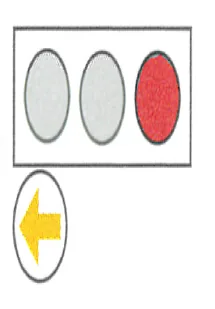
Only streetcars may make a left turn at a traffic signal as shown in the figure.
Answer: True
Question 27
When a vehicle is attempting to change lanes and a vehicle is approaching from behind, that vehicle should give way to the vehicle behind and not change lanes.
Answer: True
Question 28
If a person applying for a renewal of license and equivalent is the age of 65 or over at the renewal period expiration date, that person must take a senior driver's course within six months of the expiration date.
Answer: False
Question 29
A vehicle must not change lanes or pass vehicles or general mopeds for the purpose of overtaking at an intersection or within 30 meters before one (excluding cases when the vehicle is proceeding on a road with right of way).
Answer: True
Question 30
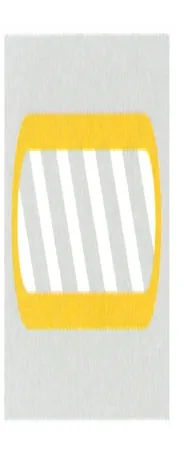
The pavement marking shown in the figure designates that vehicles must not enter this area.
Answer: True
Questions 31-50
Question 31
It is not necessary to slow down near the top of an uphill.
Answer: False
Question 32
When executing a right turn at an intersection (except roundabout), an automobile must initially approach as close as possible to the center of the road and slow down to proceed closely inside the center point of the intersection. (Excluding cases when the automobile is proceeding on a one-way street.)
Answer: True
Question 33
When overtaking, a vehicle may temporarily exceed the maximum speed limit displayed on traffic signs or designated by regulations.
Answer: False
Question 34
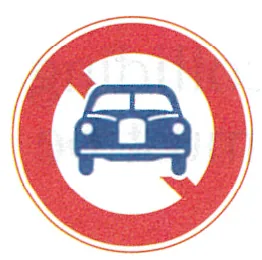
Vehicles other than regular passenger vehicles may proceed on a road where there is a traffic sign as shown in the figure.
Answer: False
Question 35
Leaving plenty of space while driving, such as keeping enough distance from the vehicle ahead and giving consideration to passing clearance, gives a driver extra time for reacting to an incident, and as a result, he or she may cover up his, her or others' driving mistakes.
Answer: True
Question 36
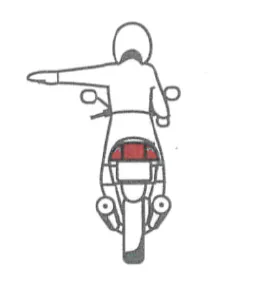
The hand signal shown in the figure means that the rider will make a left turn or change to the left lane.
Answer: True
Question 37
If the cross street is a road with right of way or is wider, a vehicle must stop completely and must not obstruct the progress of the crossing traffic.
Answer: False
Question 38
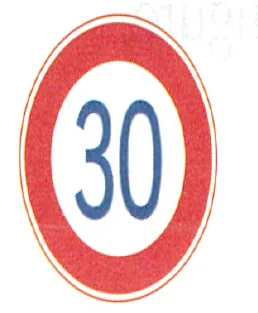
Automobiles and general mopeds must not exceed a speed of 30 km/h on a road where there is a traffic sign as shown in the figure.
Answer: True
Question 39
At an intersection where general mopeds must execute a two-step right turn, general mopeds can execute a right turn when the green arrow points to the right.
Answer: False
Question 40
When approaching a pedestrian crossing, vehicles are not required to slow down and may continue to proceed at the same speed as before, if there are apparently no pedestrians nearby.
Answer: True
Question 41
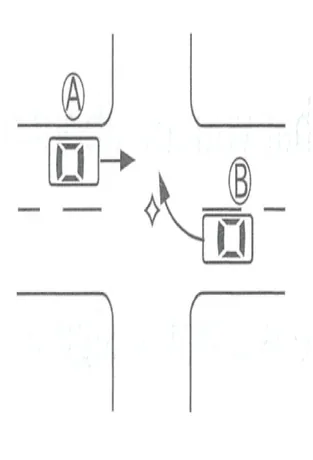
In the situation shown in the figure, if vehicle Ⓑ entered the intersection first, it may execute a right turn before vehicle Ⓐ proceeds straight ahead.
Answer: False
Question 42
Even when there are people getting on or off a streetcar at a streetcar stop where there is no safety zone, a vehicle may slow down and continue to proceed if there is a clearance of 1.5 meters or more between the vehicle and the streetcar.
Answer: False
Question 43
A vehicle that has already executed a right turn at an intersection may continue to proceed even when the signal ahead turns red.
Answer: True
Question 44
When changing to the left or right lane while proceeding in the same direction, a driver is not required to give a signal because that is not executing a left or right turn.
Answer: False
Question 45
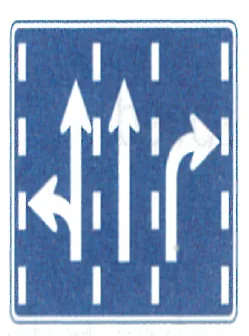
In separated lanes where there are traffic signs for traffic directions as shown in the figure, vehicles must proceed only in the directions designated by the signs.
Answer: True
Question 46
A person who obtains only a regular driver's license may not ride a large-size motorcycle or a regular motorcycle.
Answer: True
Question 47
If a driver obeys the traffic regulations, he or she might not cause a traffic accident, even if he or she does not consider others' situations.
Answer: False
Question 48
A driver must choose an appropriate vehicle speed according to the traffic or road conditions, climate or visibility, even when proceeding at a speed within the designated speed limit.
Answer: True
Question 49
Seatbelts can help a driver be in a suitable driving posture and lessen the driver's fatigue during driving.
Answer: True
Question 50
When proceeding through a railway crossing, even if one train has just passed by in one direction, there may be another train approaching from the opposite direction immediately afterward. Therefore, drivers must be sure to check the safety of the opposite direction.
Answer: True
Frequently asked questions
How many questions are in the Karimen knowledge test?
The Karimen knowledge test for an ordinary licence uses 50 questions, which is why every set on this page contains 50 true/false items.
Is this the same test used for foreign licence conversion?
No. Foreign licence conversion uses its own 50-question knowledge check with 45 correct answers required under the rule that took effect on October 1, 2025. Karimen sets prepare the learner-permit stage.
Can I take these practice questions in other languages?
Yes. The interactive practice app offers the full bank with explanations in seven languages, including Japanese, Chinese, Hindi, Urdu, Sinhala and Nepali.